OE/OO-038 Traunstein
Traunstein on the day of Chiemgau on Air
1,691 metres, six points, 32 contacts — and in the background an activation day that put half the Chiemgau range on the bands that Saturday.
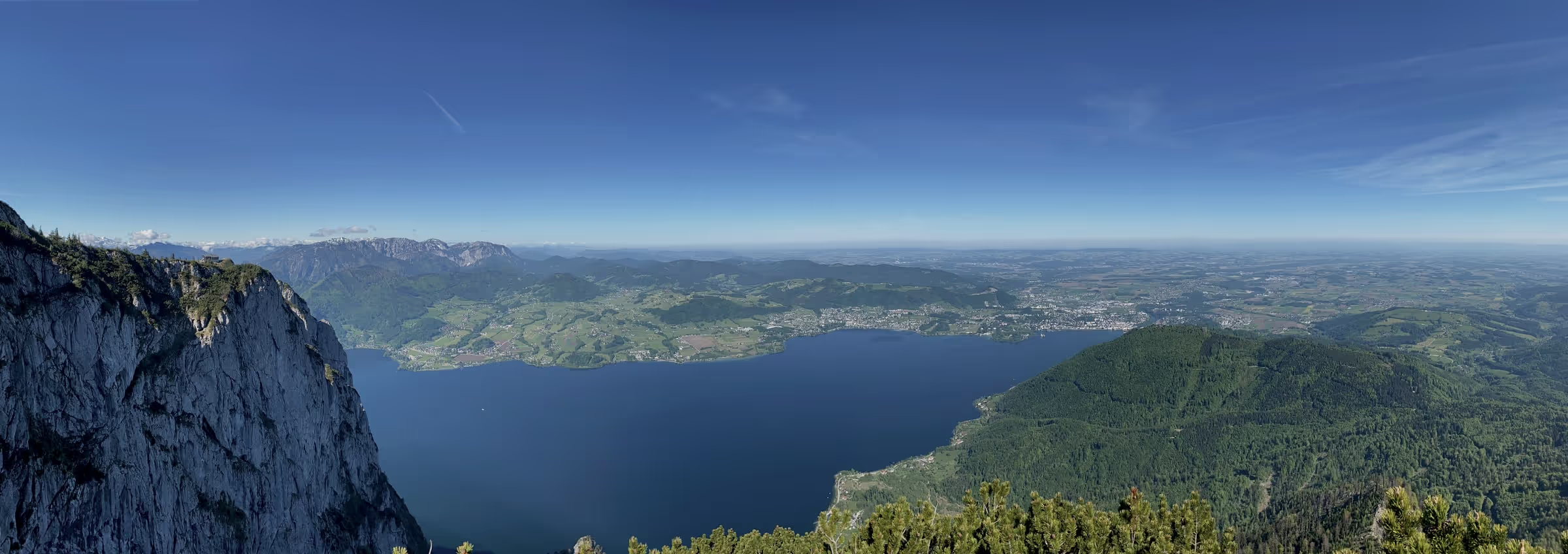
The Traunstein is the mountain you always have in view from Gmunden. 1,691 metres, reference OE/OO-038, six points — and it doesn’t sit somewhere in the hinterland but right on the lakeshore. From the water to the summit cross it’s about 1,270 metres of ascent, with no foothills in between. That’s why it looks so disproportionately huge from below.
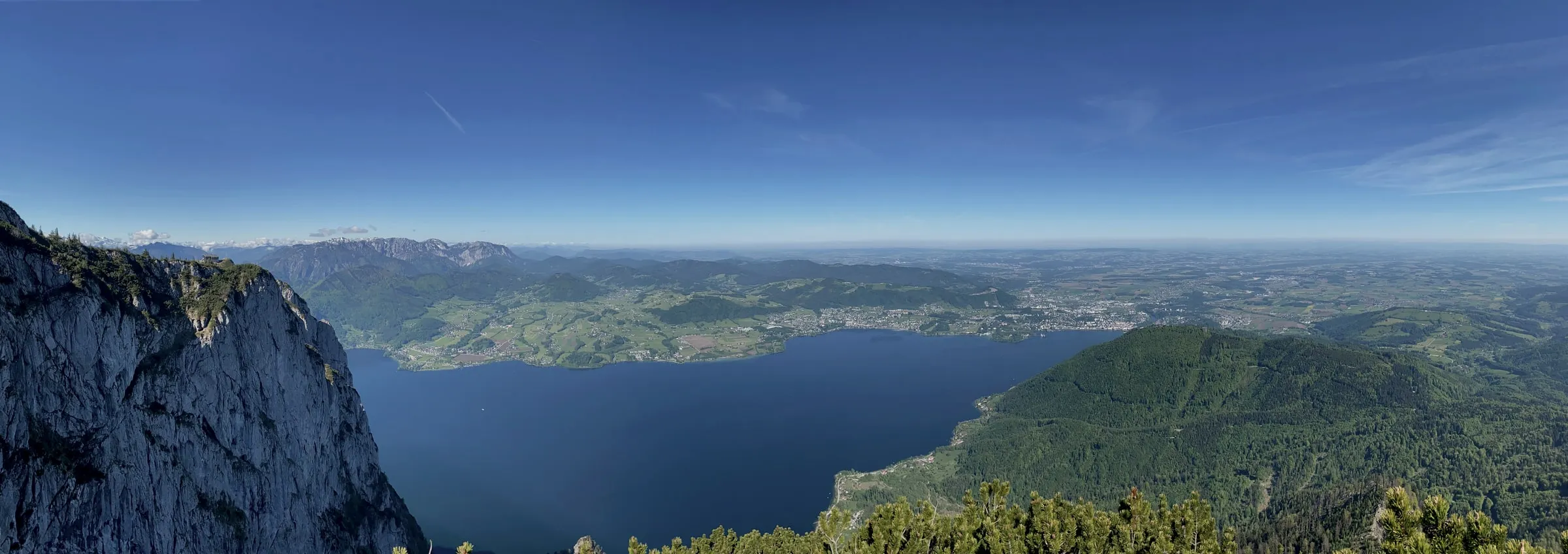
Setting off early
The climb started in the dark. Shortly after seven the sun already stood over the opposite slope, but the path still lay in shadow — and halfway up there’s this bench, set exactly into the gap between two spruces.
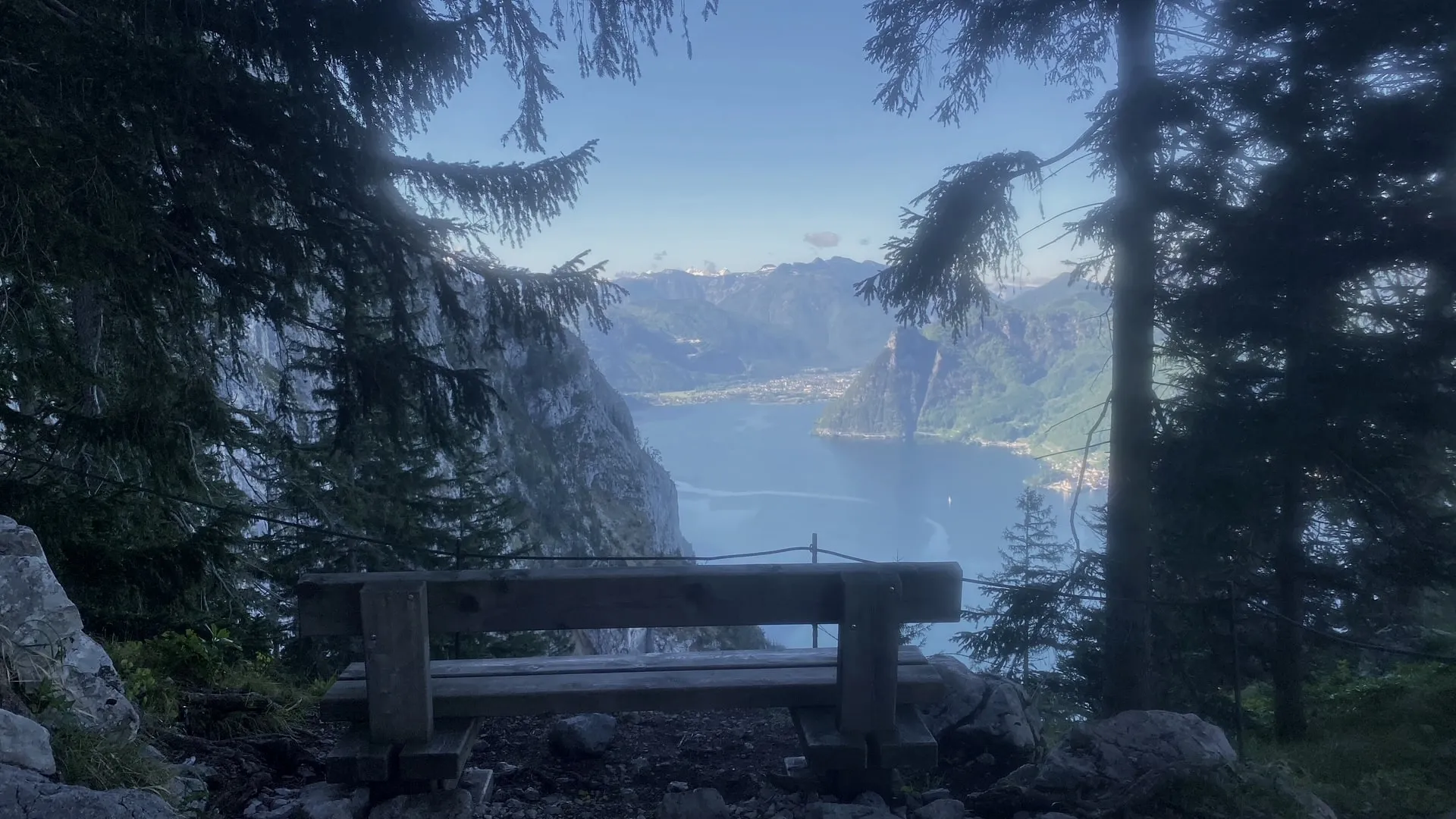
At the summit, the other direction: Gmunden at the lake’s outflow, the alpine foreland beyond it out to the haze on the horizon.
Chiemgau on Air
That Saturday I took part in the first edition of “Chiemgau on Air” — a SOTA activation day launched by the DARC local chapter of Traunstein. A nice coincidence: the chapter shares its name with the mountain I was sitting on, though it’s a good hundred kilometres further west, in Bavaria.
The goal was to occupy all 42 Chiemgau SOTA summits in a single day, from the Sattelberg at 820 metres to the Sonntagshorn at 1,961. In the end it was 31 of 42, done by 35 radio amateurs from Germany, Austria and South Tyrol. The special callsign DL25COA went on air alongside it.
The Traunstein itself isn’t part of the Chiemgau — on a day like this, though, that’s more of an advantage. With thirty summits on the bands at once, you don’t have to search long: you turn the dial and pick up one summit-to-summit contact after another.
The station
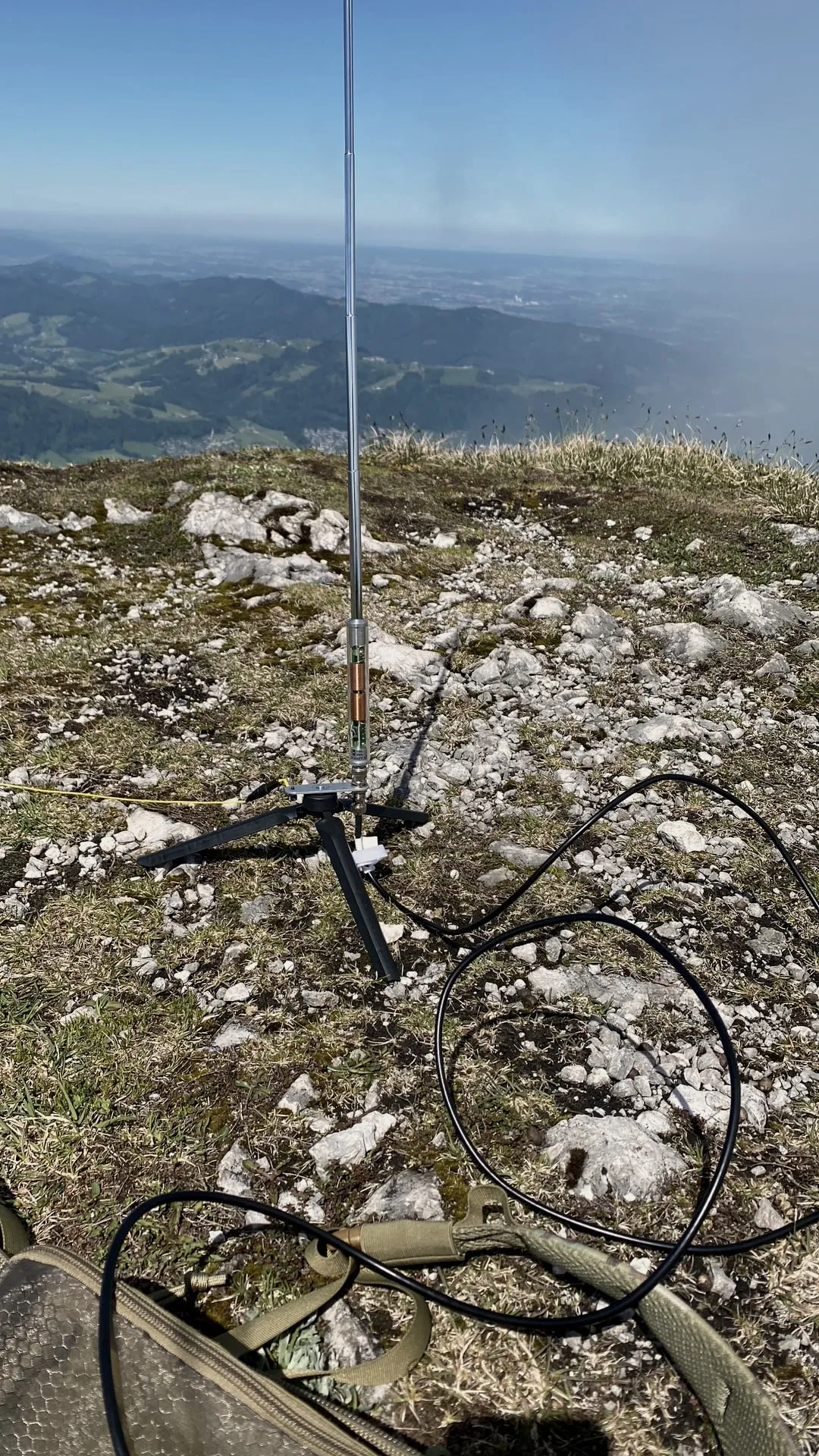
Set up was the small kit: a telescopic whip with loading coil on a low tripod, a radial laid over the rock, a short coax run to the radio.
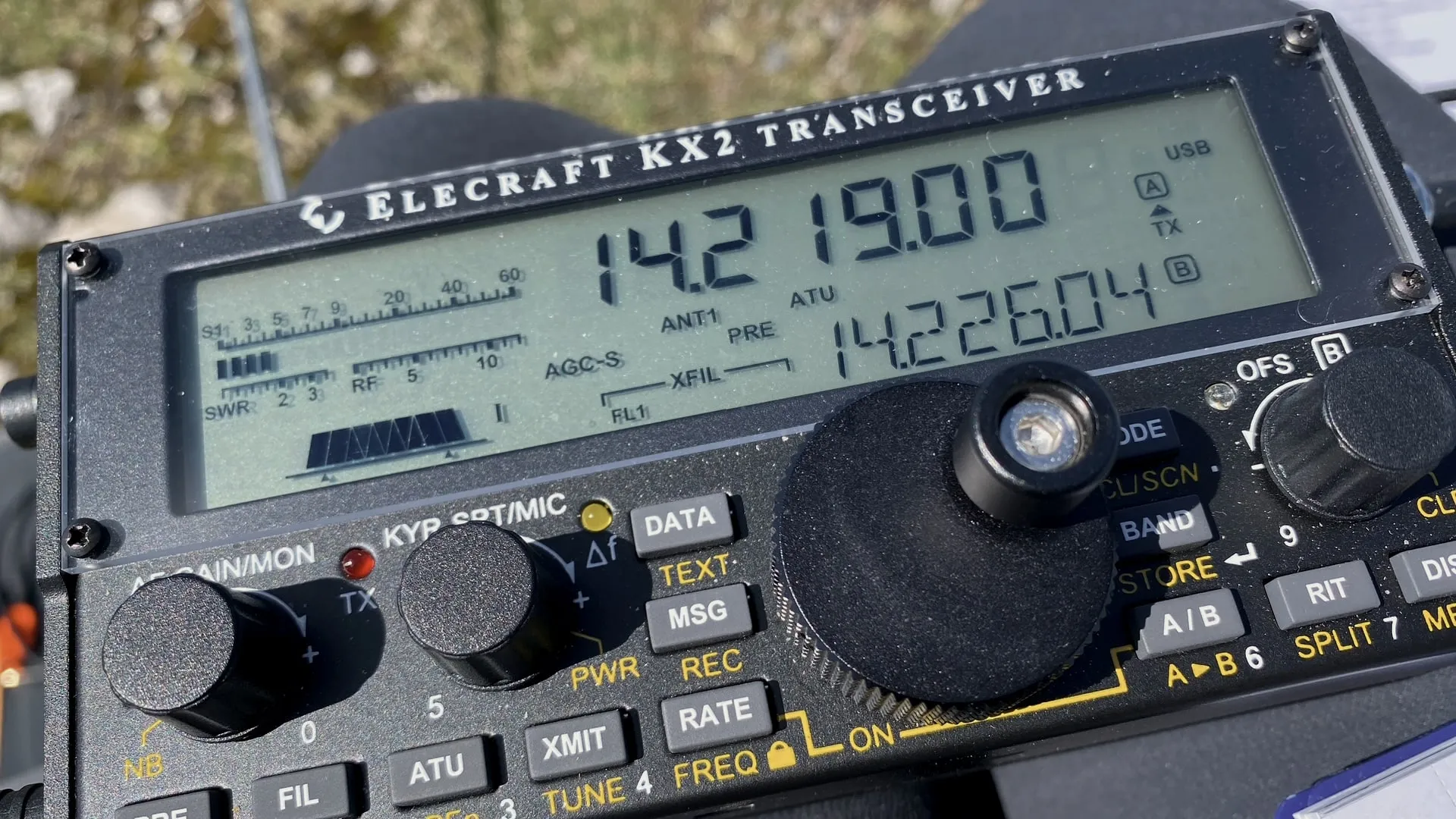
Operating was on the KX2 on 20 metres, 14.219 MHz SSB, plus a detour to 40.
What came of it
32 contacts. On the map in the SOTA database it stretches right across the continent: Wales in the west, Pamplona in northern Spain, Turin and Milan in the south, Wrocław in the north, and out at the far edge a call from Ukraine. Most of it on 14 MHz, some on 7.
Six points for a mountain I see from home every day. That’s the most pleasant kind of activation there is.
73 · OE5SOS